President's report 2010

A better than expected year
Raising the profile of motorcycles
Compeititve industry policy
Invetesting in new safety technology
Contributing to efforts to address climate change
Transport and logistics
Buying a new car made easier
Setting the agenda in 2010

A better than expected year

The Australian automotive industry has faced one of the most challenging periods in recent memory but I am pleased to say that despite the difficulties, we have emerged from 2009 in a strong position.

The Global Financial Crisis and resultant economic downturn defined the operating environment, with the local industry struggling to deal with constraints on the availability of commercial finance and faltering business and consumer confidence.

We surprised many analysts by selling 937,328 new vehicles during 2009. This was just 7.4 per cent lower than the previous year.

The industry forecast had been for total sales of 880,000 vehicles, so the final outcome certainly surpassed our original expectations and outstripped the performance of almost all other major international markets.vWithin the industry there was debate about the best way to stimulate renewed demand, with some looking to various international precedents for scrappage schemes, or ‘cash for clunkers’ as they are sometimes known.

The ‘game changing’ measure in the Australian context has to be credited as the Small Business and General Business Tax Break.

This tax break was a vital ingredient in restoring business confidence.

A significant proportion of the extra sales volume can be attributed to the additional demand generated by the tax break.

Raising the profile of motorcycles

The motorcycle market also achieved a solid result in challenging circumstances with 115,981 motorcycles, scooters and all-terrain vehicles sold – a decrease of 13.6 per cent over 2008.This is the fourth highest annual sales result on record.

Competitive industry policy

In 2009, the industry prepared for the implementation of the Australian Government’s New Car Plan for a Greener Future.

In particular, the industry welcomed the opportunities that exist through the Green Car Innovation Fund.

There have been immediate dividends from the new policy framework including the launch of the Australian Camry Hybrid, improvements in engine and transmission technology at Ford and Holden announcing the production of a new small car in Australia.

In addition, the halving of the tariff on new passenger vehicles, from 10 to 5 per cent on January 1 2010 provided a further competitive impetus to the market.

Investing in new safety technology

On the safety front, motorists and the industry continued to embrace lifesaving Electronic Stability Control (ESC) systems in greater numbers.

The combined proportion of passenger cars and Sports Utility Vehicles with ESC as standard equipment in 2009 had grown to almost 70 per cent.

The Australian Government introduced an Australian Design Rule (ADR) for the mandatory fitting of ESC to all vehicles up to 4.5 tonnes from November 2011.

The FCAI supported the adoption of the ADR requiring ESC on passenger cars, aligned with the timetable for the introduction of similar regulations in Europe.

On behalf of member brands, the FCAI worked closely with authorities in Victoria to seek amendments to the proposed ESC regulations in that state.

The FCAI was successful in more closely aligning the Victorian regulations with those in the Federal ADR.

Contributing to efforts to address climate change

The Australian new vehicle market reached a new environmental milestone with average carbon dioxide emissions the lowest on record, helped by improvements in engine technology.

The National Average Carbon Emission (NACE) figure for 2009 was 218.5 grams of CO2 per kilometre – down 1.8 per cent compared to the 2008 figure of 222.4 grams of CO2/km.

The FCAI set a target to reduce emissions from new vehicles from an average 252.4 grams of CO2/km in 2002 to 222 grams of CO2/km by the end of 2010.

The industry exceeded this target a year ahead of schedule and the industry has achieved a reduction in carbon emissions from new vehicles of around 20 per cent since 2002.

The FCAI has made submissions and been involved in consultations in relation to the implementation of Euro 5 and Euro 6 standards as well as future vehicle CO2 targets.

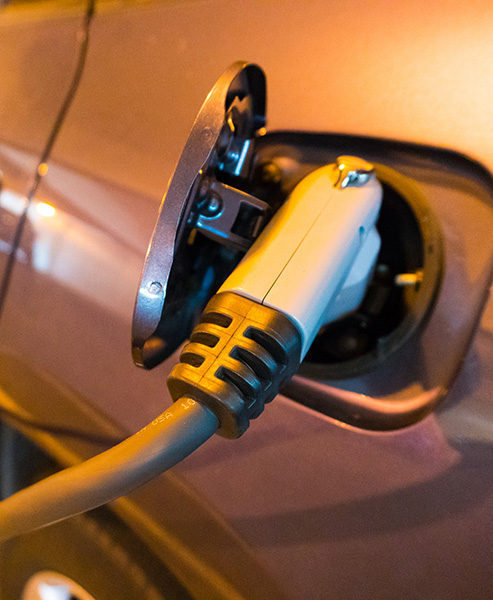
Vehicle importers and manufacturers took a significant step to prepare for the introduction of plug-in electric and electric-hybrid vehicles into the Australian market by establishing an Electric Vehicle Working Group.

The Group has worked on identifying the types of vehicles expected to be introduced to Australia, anticipated infrastructure needs as well as issues involving technical and registration requirements.

The working group has consulted relevant external stakeholders to ensure a nationally-consistent approach is maintained.

Transport and logistics

The FCAI worked with the Australian Competition and Consumer Commission (ACCC) to create a more transparent pricing situation in relation to port charges.

The automotive industry welcomed an ACCC decision to impose three new conditions on port facilities operator, Australian Amalgamated Terminals (AAT).

There will now be a price review mechanism, a dispute resolution process and a condition allowing other stevedores greater access to ports.

Buying a new car made easier

The FCAI, on behalf of member brands, moved to make researching a new car purchase easier and more user-friendly by instigating a new online price calculator to provide customers with an all-inclusive ‘drive away’ price.

This online tool is incorporated into manufacturer’s websites and allows potential customers to enter their postcode in order to gain a fair indication of how much that vehicle will cost, taking into account insurances and taxes.

Setting the agenda in 2010

It has been a strong start to 2010 with vehicle sales rebounding to levels recorded before the downturn caused by the global financial crisis.

Despite the encouraging start, it must be acknowledged that the challenges facing the industry and the wider economy have not yet fully passed.

As a key priority, we must focus on the varied strategies that brands are implementing to achieve continued improvements in fuel efficiency, to reduce CO2 emissions and for enhanced environmental performance.

The industry has already made significant progress but even greater advances will be achieved over coming years as a range of investments in new technologies and alternative fuels make their way into the Australian market.

The FCAI will be looking to work constructively with government and other stakeholders to achieve agreement on realistic and ambitious future strategies to support that outcome.

Mike Devereux
FCAI President